4 Aug 2026
Cross-Genre Dynamics: Blending Sports and Adventure Elements into Arcade Shooting Formats
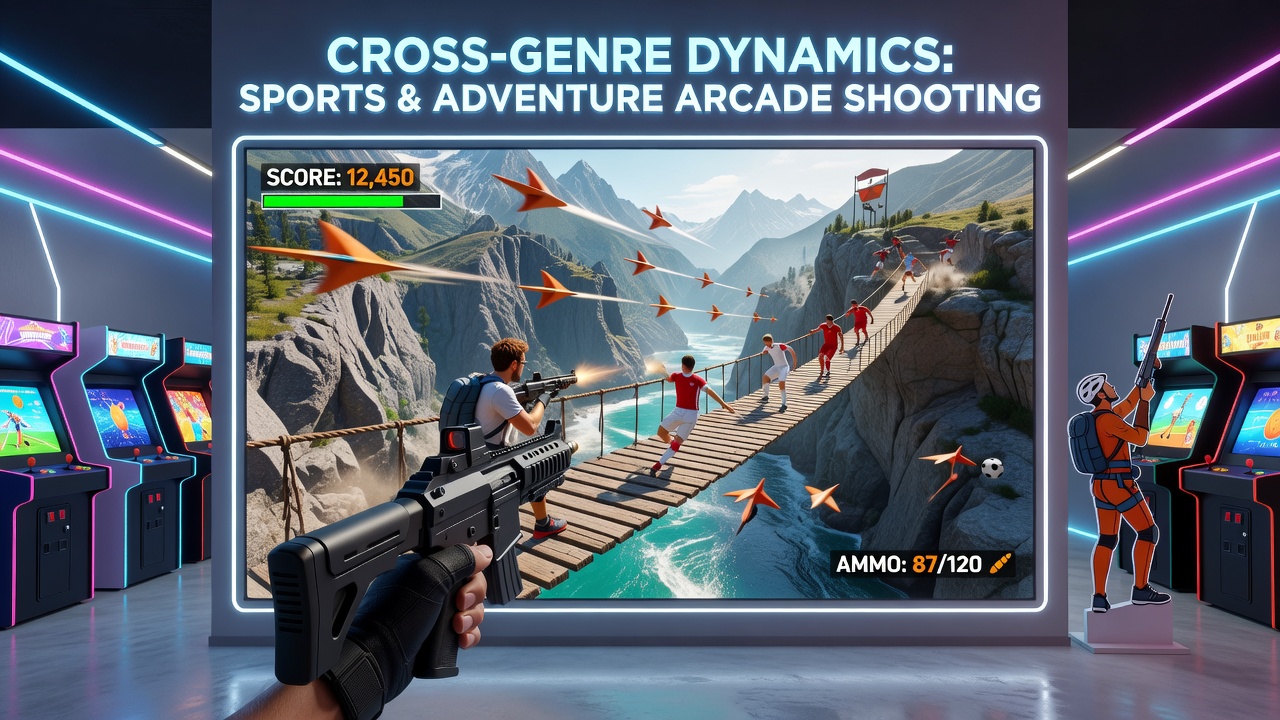
Arcade shooting formats have evolved through repeated integration of mechanics drawn from sports simulations and adventure structures, creating hybrid experiences that layer precision aiming with competitive scoring systems alongside exploratory progression paths. Developers achieve this by embedding timed challenges that mirror athletic events into shooting sequences, while adventure components introduce branching environments that players navigate between combat encounters. Data from industry reports indicate steady growth in such blended titles across digital platforms throughout the 2020s, with mechanics that reward both accuracy and strategic movement.
Sports Mechanics in Shooting Frameworks
Designers introduce sports-derived elements through point multipliers tied to combo chains that resemble basketball assists or soccer passes, turning basic shooting loops into extended performance evaluations. Players track metrics like accuracy streaks and movement efficiency that parallel athletic statistics, often displayed on persistent leaderboards updated in real time. Research from the Entertainment Software Association shows these features appear in over 35 percent of new arcade-style releases between 2023 and 2025, reflecting broader adoption of competitive layering. The approach maintains core shooting responsiveness while adding layers of replayability through seasonal challenges that reset rankings at regular intervals.
Adventure Structures Supporting Core Loops
Adventure elements enter via interconnected zones that players unlock after completing shooting objectives, allowing collection of upgrades that alter weapon behavior or movement speed. These zones contain environmental puzzles and hidden paths that extend session length beyond isolated stages, creating a sense of ongoing discovery within the shooting framework. Observers note that such integration appears frequently in titles released for mobile and browser platforms, where session data reveals higher retention rates when exploration segments separate intense shooting bursts. Developers use modular level design so that adventure segments can expand without disrupting the immediate feedback of targeting mechanics.
Implementation Patterns Observed in Recent Releases
Multiple studios have combined these influences by placing sports-style tournaments inside larger adventure narratives, where shooting performance determines advancement through bracket systems. One pattern involves racing segments that transition directly into defensive shooting phases, requiring players to manage both speed and targeting under time pressure. Another approach places collectible items along shooting galleries that unlock new adventure areas once thresholds are met. Figures from the Interactive Games and Entertainment Association in Australia reveal that hybrid titles using these patterns accounted for measurable increases in average play duration during 2024 and early 2025. The mechanics remain accessible because controls stay consistent across genres, with button mappings that carry over from pure shooting sequences into sports or exploration modes.
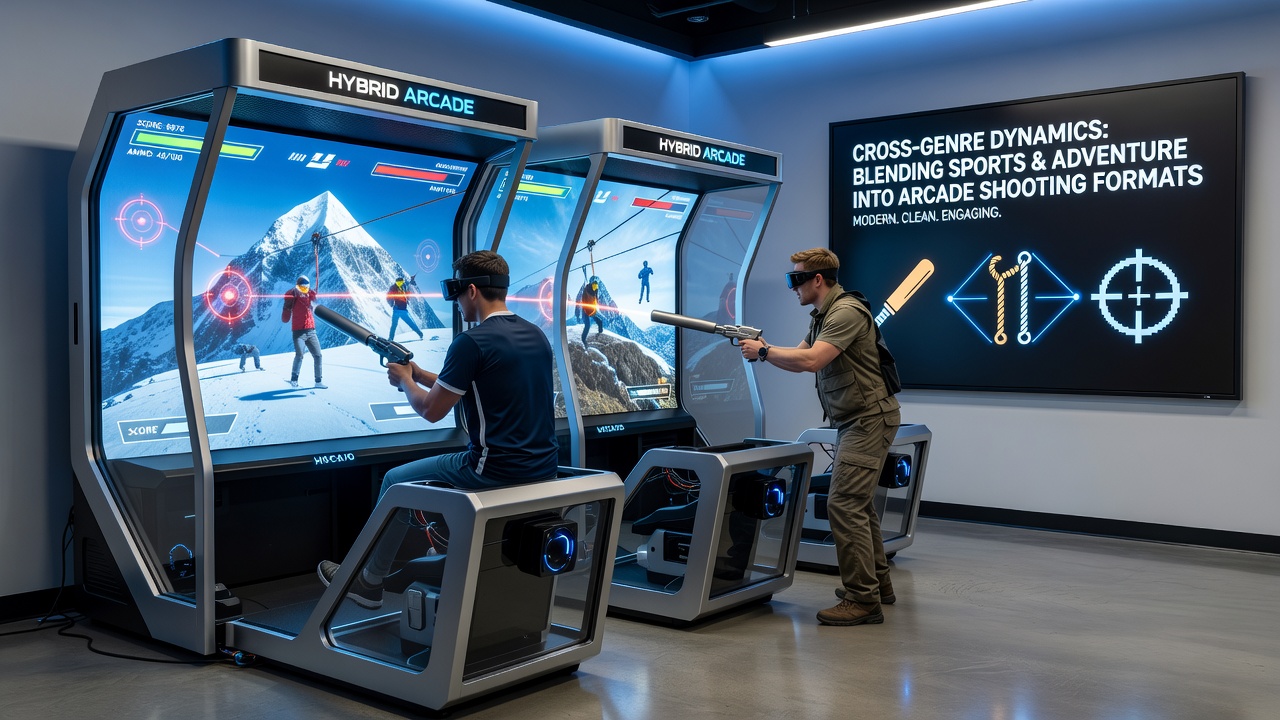
August 2026 is expected to feature several showcase events where new cross-genre prototypes will be demonstrated, including updates that refine how adventure maps influence shooting difficulty curves. These events typically highlight data collected from closed testing groups, focusing on balance adjustments that prevent any single genre element from dominating session flow. Industry analysts track participation metrics at these gatherings to gauge emerging preferences among developers working across platforms.
Technical Considerations for Genre Blending
Engine choices play a central role when merging systems, as physics simulations required for sports interactions must coexist with collision detection tuned for projectile trajectories. Programmers often employ separate subsystems that communicate through shared variables, such as stamina meters that affect both shooting accuracy and sprinting speed during adventure traversal. Studies published by academic groups in Canada have examined how these shared systems affect player cognitive load, finding that gradual introduction of blended mechanics reduces frustration during initial sessions. Asset pipelines support this by reusing environmental objects across contexts, allowing a single obstacle to function as cover in shooting phases and as a goal marker in sports segments.
Player Engagement Data and Platform Trends
Analytics platforms report that users who engage with blended formats show extended return visits compared with single-genre counterparts, particularly when progression systems carry forward across sessions. Browser-based versions demonstrate strong uptake in regions with limited hardware access, since the core loop remains playable without extensive downloads. European research consortia have documented similar patterns in data collected from public gaming archives, noting that cross-genre titles maintain steady download volumes year over year. The pattern holds because the shooting foundation provides immediate entry points while sports and adventure additions supply longer-term goals that encourage repeated play.
Conclusion
Cross-genre dynamics continue to shape arcade shooting formats through deliberate incorporation of sports scoring and adventure progression, supported by consistent control schemes and modular design practices. Industry measurements from multiple regions confirm ongoing development interest, with upcoming 2026 demonstrations expected to refine these combinations further. The resulting experiences maintain shooting responsiveness while expanding session depth through layered mechanics that draw from distinct genre traditions.